
Wisdom, Perspective and Hope on the Border: A Wisdom Conversation with Gil Gillenwater
Welcome back to The Main Thing Podcast. We recently engaged in a meaningful and transformative conversation with Gil Gillenwater, a trailblazing humanitarian leader. Gil has devoted his life to serving people in the U.S.–Mexico borderlands. This conversation offers listeners a deeper, more grounded understanding of the southern border, beyond headlines, politics, and talking points.
Let’s be clear from the outset: if you think this episode is about free handouts or opening up our borders to everyone, you are sorely mistaken. By contrast, your eyes will be dramatically opened when you listen to Gil’s wisdom. What unfolds is a focused, human conversation about dignity, responsibility, faith, and hope—shared by someone who has lived and worked in the borderlands for decades.
Podcast Resources & Links
- Rancho Feliz Charitable Foundation (Gil’s nonprofit):
https://ranchofeliz.com/ - Gil Gillenwater’s book — “Hope on the Border”
https://a.co/d/ciQvuDI (From Amazon) - Videos about Rancho Feliz
https://youtube.com/@ranchofeliz?si=JctJeBTZSm2M2ycT - Gil and Troy’s Epic 1982 Journey – The Arizona Trail
- View this podcast with video on our YouTube Channel
A Focused Wisdom Conversation ABout The Border and its people
This episode invites listeners to elevate their perspective on one of the most complex and misunderstood issues in American life by hearing directly from someone with lived experience on the border.
Gil shares what decades of service have taught him about humility, human dignity, leadership, and faith—offering insight that replaces assumption with understanding and reaction with clarity.
What You’ll Learn in This Episode
- How lived experience reshapes our understanding of the U.S.–Mexico border
- Why responsibility and dignity matter as much as compassion
- What long-term service teaches us about leadership and humility
- How faith can inform action without relying on easy answers
Why This Episode Matters
Few topics generate more emotion—and less understanding—than America’s southern border. This episode is for anyone willing to have assumptions challenged and perspective expanded.
More About Our Wise Guest
Gil Gillenwater is the founder and president of the Rancho Feliz Charitable Foundation, an award-winning nonprofit dedicated to long-term, dignity-centered service in the U.S.–Mexico borderlands.
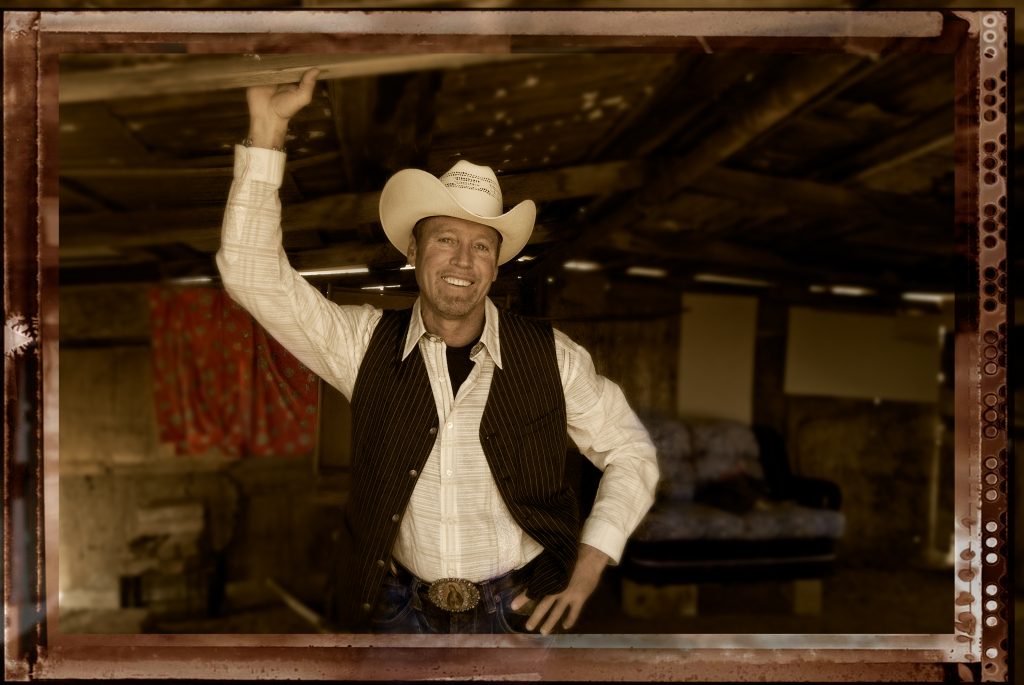
Gil Gillenwater’s work has been recognized with Arizona’s highest honor for volunteerism, as well as formal recognition from Mexican authorities. He is also the author of Hope on the Border, a deeply human account of life and service in the borderlands, highlighting both hard realities and quiet acts of redemption.
Credits
Editor + Technical Advisor Bob Hotchkiss
Brand + Strategy Advisor Andy Malinoski
PR + Partnerships Advisor Rachel Bell
Marketing, Social Media and Graphic Design Chloe Lineberg
Stay Connected with Us on Social
YouTube @themainthingpod
Instagram @themainthingpod
Facebook @TheMainThingPod
Help Support and Sustain This Podcast
- Become a subscriber.
- Share the podcast with one or two friends.
- Buy some Main Thing Merch from our Merchandise Store.
- Buy a book from our curated wisdom collection on bookshop.org.
- Become a patron and support us on Patreon with funding.
Episode Chapters
[00:00] — Wisdom, perspective and the need for a broader view
[01:19] — Why the Southern Border demands wisdom, not soundbites
[02:03] — Meet Gil Gillenwater: a life devoted to the Borderlands
[03:22] — Walking Arizona and the power of public lands
[05:43] — The trip that changed everything; skipping Thanksgiving
[09:01] — Dignity, not handouts; the lesson that reshaped Gil’s mission
[11:20] — What Americans aren’t seeing about the Southern Border
[15:01] — Walls, human suffering and hard truths
[18:11] — Enlightened self-interest and the power of service
[24:21] — Gil’s “Main Thing” revealed
[30:52] — Rancho Feliz – an invitation to participate
[31:40] — A parting word from Gil on connection and shared humanity
Episode Keywords
Wisdom, service, vision, leadership, humanity, dignity, Mexico, immigration, border, Arizona, wall, reciprocity, education, wealth, borderlands, crime, drugs, economics, poverty, hope
Episode Transcript
Announcer
[00:00:00] Wisdom. It’s an incredibly valuable asset. Some would say more precious than gold. It’s attractive, appealing, admirable. Conversely, a lack of wisdom is the basis of immaturity, blind spots, and bad decisions.
Wisdom. It can be gained over time, but it can’t be rushed. But wisdom can be shared. That’s precisely what we are here to do right now today. We are here to hack wisdom to distill it, to understand it, and to process it.
Why? To get better at life. Welcome to the main thing. This is your new wisdom podcast. I’m your host, Skip Lineberg, and I’ve set out to interview the wisest people I know.
We’ll see what we can learn from each one when they’re faced with an incredibly difficult soul piercing question.
Skip Lineberg
[0:00:58] Hey there. I’m Skip Lineberg coming to you today from Parkwood Studios, and I’m delighted to welcome you back to the Main Thing Podcast, your wisdom podcast.
Speaking of wisdom, sometimes wisdom looks like questioning our assumptions, challenging what we think we know about something. Wisdom involves seeking new and broader perspectives.
This is precisely where I find myself on an important issue: the southern border of the United States. Yes, that border we share with Mexico. Over the past few years, like you, I’ve been bombarded with more headlines, more sound bites, and more five second media clips about issues related to our southern border, policies, walls, illegal entries, drugs, crime, human smuggling, staggering costs.
I’ve not been to the border lately. So, I was simply lacking wisdom, lacking credible information, lacking real human unbiased perspective. That’s why I pounced on the opportunity to connect with today’s guest. He has devoted his life to understanding, helping, and supporting the people and communities that exist in our borderlands.
Gil Gillenwater is the founder and president of the award winning Rancho Feliz Charitable Foundation. Gil’s work has been recognized with Arizona’s highest honor for volunteerism and by Mexican authorities as well.
Gil is the author of “Hope on the Border,” the book that tells the raw story of America’s borderlands. It’s a story of shared humanity and self interest. It exposes painful truths, but also spotlight solutions and the small redemptions that keep him working for change.
Throughout his decades of work with Rancho Feliz, Gil has flipped old models on their head and brought about dignity, empowerment, and reciprocity. Gil is a practical hands-on leader and also deeply spiritual, kind, and generous, and that’s what makes him a great fit for our show. He joins us today from his home in Scottsdale, Arizona.
Skip Lineberg
[00:03:07] Gil Gillenwater, welcome to the Main Thing Podcast. It’s great to be with you today!
Gil Gillenwater
[00:03:14] Skip, it’s a pleasure to be here, and, I’ve watched some of your past episodes, and this is exciting for me. I think we’re in for a real adventure.
Skip Lineberg
[00:03:22] Well, thank you, Gil. Recent news …. I learned from you the other day that that you’re gonna be on TV and the subject of an upcoming documentary. Tell us a little bit about that.
Gil Gillenwater
[00:03:36] Skip, it’s crazy how life works. When I was 28 years old, my brother and I decided we were gonna walk across Arizona. And, you know, it was no small task because there’s no water in Arizona.
Skip Lineberg
[00:03:51] Okay.
Gil Gillenwater
[00:03:51] But we got two mules, and we cobbled together a a route. And it got in the newspapers and stuff. Well, sure enough, they turned our route into the Arizona National Historic Trail, which is traveled by thousands of people these days.
Skip Lineberg
[00:04:06] Wow.
Gil Gillenwater
[00:04:06] And so in their forty year anniversary, they’ve put together a documentary about how my brother and I … we’ve got …. Fortunately, we took a lot of photographs and there’s some television interviews, but I’m really excited for people to see this. It’s a forty-minute documentary, and it it really talks about how valuable public lands are to our lifestyle and our mental health.
Skip Lineberg
[00:04:27] Absolutely. Yeah. And you as you explained it to me, a a comparison point for me is the Appalachian Trail over here in the Eastern United States.
Gil Gillenwater
[00:04:35] Extremely popular for a reason.
Skip Lineberg
[00:04:37] Yeah. So that’s really cool, and I can’t wait to get the link from you when that’s published.
Gil Gillenwater
[00:04:44] Absolutely.
Skip Lineberg
[00:04:45] And I’ll share it out with our with our listeners. You know, folks would have heard me in the introduction talk about my my interest in … my passion for … learning more about our border borderlands issues. And if you’re an American, you can’t not hear about this: in our in our media, in the public, debate, the rhetoric, the campaign issues. It’s just there. When your friend, Wes, reached out to me and he said, I’ve got this guy, Gil. Here’s what he’s about.
Skip Lineberg
[00:05:17] Here’s what he’s devoted his life to, and he’s got a new book out. I jumped at the chance to to connect with you.
Gil Gillenwater
[00:05:24] Well, I appreciate that. I’m in close proximity. I mean, from where I am in the bubble of of affluence here in Scottsdale, Arizona, five-hour drive, and I can be in poverty that I I’ve encountered in Bangladesh and places like that. It it’s hard to believe.
Skip Lineberg
[00:05:40] Well, Gil, let’s get into that a little bit. What what first drew your attention to the border, the borderlands, and why have you devoted so much of your life to this region and its people?
Gil Gillenwater
[00:05:54] You know, I’ve often thought about that myself. I’ve always liked Mexico. I was introduced to Mexico by my father early on just some trips down and back, and I knew that there was poverty there. And I’ll tell you a real quick story. Do you remember Groundhog’s Day?
Gil Gillenwater
[00:06:09] Yeah. The movie? Of course. Bill Murray. I love that movie.
Gil Gillenwater
[00:06:11] But anyway, we were sitting down my brother and I, Troy, we’re sitting down in 1987 to Thanksgiving, and I said, “Troy, you know, we could I could write the script. We’re gonna drink too much beer, eat too much turkey, and watch football.” There’s nothing inherently wrong with any of those things.
[00:06:27] But when you know, four hours away, there are people without the basic necessities of the human condition. So we got up, went to I think it was Costco at the time or Price Club. I don’t remember. And got about $2,000 worth of staple items. We’re going to drive to Nogales.
Skip Lineberg
[00:06:43] Okay.
Gil Gillenwater
[00:06:44] And here’s where I learned an important lesson, Skip. When you are in service to others, you access … it’s a portal to coincidence. It’s a portal to serendipity. And I missed the turn. I literally missed the turn in Nogales and we on on I-19, we were trying to turn around. And and we looked at each other and said, well, let’s just see where we end up.
Gil Gillenwater
[00:07:04] And sure enough, we went down to Benson. We went to Tombstone, Douglas, and crossed the border into a community called Agua Prieta.
Agua Prieta in Spanish means dirty or brackish water. Had a population of a 110,000 people. Not all of Mexico is like the border region. I’ve been, you know, Guanajuato. And Mexico City is one of the most exciting cities in the world. But 40,000,000 people in Mexico live on less than $5 a day. And unfortunately, we get a lot of that because people come up, they wanna come into America, and they can’t make it. They tumble back into Agua Prieta, and the conditions are …. It’s a virtual refugee camp. Dirt floors, kids with, you know, no running water. I mean, it’s just again, the the contrast between where I live here in Scottsdale, where your average price home is $850,000 to down there where you got people living in clapboard shacks. It’s startling.
Skip Lineberg
[00:08:09] Let’s go back to that first trip. There you are. You and your brother. You have $2,000 worth of staples with you. What did you do?
Gil Gillenwater
[00:08:17] We started passing them out, and my Spanish–even though I’ve been down there so long–my Spanish is really rough. But I saw a sign that said “Orfanato.” Well, I can figure that one out. Turn down the road, drive down, and I come to a place, and there’s this lady named Eunice, and she had collected, like, eight children off the streets, and she’d started an orphanage called Rancho Feliz, which we adopted that name. And she was … there was no indoor plumbing. There was no heat.
[00:08:47] And we raised $15,000, and we went in and we put in indoor plumbing. They could take a shower. We put in heat. That’s when I kinda said, you know, I can’t pretend like this isn’t happening. I’ve got the privilege. I’ve got the resources. I’ve been given in America every opportunity in the world to educate myself, and I’m gonna go down there and make a difference.
Welfare, in my opinion, is the worst thing you can possibly do to the human spirit. We helped the Tarahumara Indians, and I’ve befriended this guy named Felipe. And I remember up here in Phoenix, I saw this really cool knife. And I said, ah, Felipe would love that. So I took it down my next trip. I found him down in the bottom of the canyon. Felipe, look what I’ve got for you. And he took it, and he opened the blades and everything.
And I went off to do something. I came back. He was gone, but the knife was sitting on the log that he had been sitting on. And this older Tarahumara tapped me on the shoulder and said, “Oh, no, Mister Gill. You did a very, very bad thing in our culture.”
Skip Lineberg
[00:09:51] Wow.
Gil Gillenwater
[00:09:52] I said, what are you talking about? I gave the guy a gift. He says, “Yes. But you didn’t let him know you were gonna do that, so he had nothing to give you back.”
Now think about that, Skip. What I did there, I’m the benevolent giver, and I get to feel all warm and fuzzy. Oh, and by the way, you’re the lowly receiver, and I have just stolen your dignity. And I’ll tell you what. In my charitable work, I’ve done it for forty years. That is the one of the very most important lessons you can learn. Don’t give anybody anything they didn’t earn.
Now how can you do that? Our food distributions. We give bags of food, a thousand bags of food. We feed 4,000 people. Yes. But to get a bag of food, you have to pick up 20 pieces of discarded plastic in the city of Agua Prieta.
Skip Lineberg
[00:10:38] Yeah.
Gil Gillenwater
[00:10:39] So when they come they didn’t collect 20; they collected 200. We have our dignity. We all have our dignity. Some of us were born on the wrong side of a fence. That’s the only difference between me and those people is blind luck.
Skip Lineberg
[00:10:55] Yep. So they’re not getting a handout. They’re working to earn something.
Gil Gillenwater
[00:10:58] Working for it. And it you know, that we cleaned up … it was, like, 480,000 pounds of trash over the last several years off the city streets. And it’s not even that. It’s the fact that they contributed.
I call it reciprocal giving. You have to involve both parties in the transaction.
Skip Lineberg
[00:11:20] Gil, what’s the reality of our border between The United States and Mexico? I see five-second video clips on on news and social media. What are we not seeing? And what what should Americans understand to have that wiser, broader perspective that I’m that I’m seeking?
Gil Gillenwater
[00:11:41] Well, first of all, they should understand if you were born in The United States Of America, you won the largest lottery ever conducted. You are living … if you make $60,000 or more, you are in the top 1% of planet Earth.
Skip Lineberg
[00:11:56] Amazing.
Gil Gillenwater
[00:11:57] Yeah, four billion people live on less than $7 a day. I mean, the World Happiness Report just came out. America ranks 62 out of 143 countries. We’re not … we’re not happy people here, even though we’ve got all this wealth.
Gil Gillenwater
[00:12:13] And so that’s number one. You gotta recognize that there this wealth disparity, of course, people are gonna wanna try to come in. But we can’t allow 4 billion … who’s gonna take care of four billion people? We can’t feed everybody. But the problem is, Skip, and I really …. We have a hand in this.
Number one, if you came over and you wanted to apply for asylum, it can be up to fifteen years or longer. Our asylum program is broken. Citizenship in 15 years.
Skip Lineberg
[00:12:41] Fifteen years! So there’s there’s a big one that we don’t often hear about. Keep keep going. What else are we not seeing?
Gil Gillenwater
[00:12:48] Mexico is one of the most dangerous countries, in the world as far as murders with the drug smuggling and everything. Ninety eight percent of the murders in Mexico are committed with guns that are either manufactured in America or smuggled through America.
Skip Lineberg
[00:13:04] Oh my gosh.
Gil Gillenwater
[00:13:05] So we have a hand in that little problem. We have a hand in that we are the largest consumer of illegal drugs in the world. And Mexico’s gonna supply those drugs, whose fault is that? Is it their fault, or is it the people that are sniffing it up their damn noses?
Skip Lineberg
[00:13:22] There’s number three. The drugs are coming north. And the the Iron River, you call it.
Gil Gillenwater
[00:13:28] Iron River. Right.
Skip Lineberg
[00:13:29] Those iron gun barrels are flowing south. Yes. So those things that …. I mean, that’s just pure economics, isn’t it?
Gil Gillenwater
[00:13:36] Pretty much every problem with the border is pure economics. We live in a capitalistic country, and I love capitalism. But when it becomes your god, you’re in trouble. Unbridled capitalism is a feeding frenzy, and I think that’s kind of what we’re seeing right now, where the average person can no more afford to buy a home than the man on the moon.
But the the other one, if I was if I was 20 or 30 years younger, I would take on the Maquiladoras. They were in the fair trade agreement of 1974. NAFTA allowed American companies, and there’s 3,000 of them, to step right across the border, open a a plant, and pay people indentured servitude wages – $14 a day. Now you tell me, Skip, how do you raise a family on $14 a day so Gil Gillenwater can buy a deceptively cheap flat screen TV at Costco. So I guess my message here is America has as much or more of a role in the problems on the border border than Mexico ever thought about having.
Skip Lineberg
[00:14:44] I know again from talking to you and reading your book that it’s not just about … that the building the wall is not gonna fix it.
Gil Gillenwater
[00:14:50] Right. It’ll help. You know what I like about building the wall? I walk those migrant trails and I find the dead bodies. There haven’t been any lately, because they can’t get across. Now, I think a wall is a bizarre, seventeenth century solution to a twenty-first century problem. We just talked about the wealth disparity, and we just can’t open our gates to everybody. Number one, we can’t afford it. We can’t … it’s physically impossible.
We can’t afford to subsidize millions and millions and millions of people and the suffering, all these people. I got to see it, Skip. You can’t imagine these people with their babies. And they were invited, come to you, and they get here and we say, oh, we changed our mind. Now go home. They can’t. I can’t after struggling through the Darrian Gap and all that.
Do you realize 80% … this is a UN statistic … eighty percent of the women that go on that journey get raped. Eighty percent! And that’s going on. People dying in the desert trying to get a better life. People being sexually abused. You’ve got to have control. You have to have control or the concomitant suffering ….
And immigration without assimilation is invasion. When people come here, they need to assimilate. They need to become Americans. Otherwise, they brought their crummy country into ours.
Skip Lineberg
[00:16:15] 100%. Yep.
Gil, your book, “Hope on the Border.” Folks, you can see immediately that it’s beautifully produced. It’s well written. You captivate us and kinda knock our socks off right in the beginning with with a couple powerful stories that are straight out of a Hollywood movie.
And secondly, like many many people in the world today, I have a increasingly shortening … shortening attention span. And so the lessons in here are a page or two, and I can I can learn something and digest that. And along the way, I’ve got the visual that helps me to contextualize that.
So I just think it’s a fabulous book. You talk about the economics. You talk about the human suffering. You talk about the wall itself. You talk about the culture and the history and the spirituality of of Mexico and and and our neighbors to the south, and it’s just it’s excellent.
Gil Gillenwater
[00:17:13] Well, I do appreciate that, Skip, and it can be purchased on Amazon. It’s a real easy way to get access to the book. So I really appreciate you bringing that to attention. I’ve been down there. I’ve devoted forty years of my life, and so this is some of the the term you use, wisdom that I have gained.
And I’ve made my share of mistakes, but I find out what works and what doesn’t. And if we can align our programs with basic human nature, they’re gonna work. As long as charity is explained as a sacrifice, you can forget it. Who’s gonna sign up for that?
Skip Lineberg
[00:17:47] Right.
Gil Gillenwater
[00:17:48] My contention is charity is service work … is salvation. It’s not sacrifice.
Skip Lineberg
[00:17:55] A big part of the book that was really informative to me is about the reciprocal giving and the reciprocity. And you explain that and why it matters and you justify your point there very very very convincingly.
Gil Gillenwater
[00:18:10] You bet. Because I lived it. These aren’t … I’ve lived … These are lived experiences, and I call it enlightened self interest.
What I noticed when I would take my volunteers down and we would give new bicycles out to the kids and we would do food distributions and and and the Mexicans were very thankful and all that. But you know what I noticed? The Americans … every year the group would get bigger and bigger. And I’m going, what’s going on here? Well, we’re feeding their stomachs; they’re feeding our souls.
My volunteers get a new sense of purpose. They get a new sense of meaning in their lives. In America these days, those venues are really kind of hard to find. So they can go down there, spend three days, and know that they literally made a difference. Put a roof on a house, the next time it rains, the whole family doesn’t get wet. They’ve made a difference. And when they’re laying on their deathbed, they can say, I’m leaving this world a little better than I found it.
Skip Lineberg
[00:19:11] Gil, talk a little bit more about … and I know this because we’ve talked, and again, I’ve read your book … but how many how many trips you’ve made down there and the kinds of projects, the kind of service projects that you’ve done. I’d like to hear a little bit more about that.
Gil Gillenwater
[00:19:23] Absolutely. In fact, I put some of that down. I’m just gonna tell you off the top of my head. I know for a fact we’ve issued over 4,000 scholarships. I’m big on education. We’ve issued 6,800 diplomas for adult learning. We we have adult learning classes where they can get the because in the “maquilas” if you get a GED equivalent graduation certificate, you make an extra $2 a day. That doesn’t sound like much to me and you, but when $14 is your base, it means something.
Skip Lineberg
[00:19:54] And, Gil, the the scholarships, as I recall from reading about that in the book, folks have to earn those. Right? They have to they have to apply and ….
Gil Gillenwater
[00:20:02] Absolutely. Yeah. Absolutely. Nothing is free. That’s misguided charitable handouts in my opinion. So, yes, they have to apply. And then what’s interesting, the students have to volunteer. Once a month, they have to take a weekend. They have to find and it’s really cool … we find they go into the community to find out what what needs help. Do you need this building painted? Do you need this trash picked up? Do you need this hauled over here? And the students, they all wear their their uniform t-shirts and they get it done. But that’s how they earn their education.
We’ve built over 1,300 homes. You wanna talk about a feeling of purpose. Our groups will come down. They’ll build a home in three days. And we’ll get the little family. Get to meet meet the family, and we give them the keys on that last day. And I tell you, there’s not a dry eye in the place.
Skip Lineberg
[00:20:51] I’m sure. Mine wouldn’t be either.
Gil Gillenwater
[00:20:56] So, anyway, we’ve done … I could go on and on. 64,000 bags of food. We’ve collected 21,000,000 discarded plastic bags. We’ve done a lot.
We’ve we’ve got a big footprint down there, and it’s interesting because with a 2,000 mile border, I don’t know another organization that has accomplished what we’ve been able to do down there. And I’m anxious to see somebody come in and replicate it. Because, you know, we just we just deeded over $1,800,000 in equity on homes. We’ve created a Mexican middle class down there.
Skip Lineberg
[00:21:31] Yeah. That’s awesome.
Gil Gillenwater
[00:21:33] We need to sit down and say: what do I want to accomplish in this life? And what is the purpose? What am I doing here? My answer to that: I wanna have the most fun I possibly can. In fact, my my mantra is he or she who dies having had the most fun wins.
Skip Lineberg
[00:21:52] There you go.
Gil Gillenwater
[00:21:53] So to find it that’s an emotion. That’s a happiness that’s an emotion. I want a happiness that is sustained, that is a joy that I can just part of who I am.
Skip Lineberg
[00:22:05] Deep joy and inextinguishable.
Gil Gillenwater
[00:22:08] Absolutely. Yeah. And, you know, they have proven that when you are in service to others … with this magnetic resonance imaging, the left side of your brain is more stimulated, which is an indicator of joy, of happiness. And the longer you do it, the longer it stays there. So you can literally rewire your brain to be a happier person. Who wouldn’t do that?
I think this is a message really that America needs to hear: that it is in your best interest to volunteer, to serve. It’s in your best interest. Because we’re still you you know, we’ve been in the formation of our brains for six hundred million years. We’ve been civilized for what – six thousand? That’s .00012% of our time on the planet we’ve been civilized. So we’re carrying a lot of genetics that are based on primal survival. And I want mine. I’m gonna get mine before you get yours and blah blah blah, which is gonna be the downfall of our of our civilization.
We need to understand that it is not a sacrifice to help. It is a portal to an abundant and rich life. And and that was my purpose with writing this book, was to change the way we view service work. I think Mother Teresa was the most selfish woman on this earth because she found out what brought her greatest joy, and she immersed herself in it a 100%. By definition, that’s selfish.
Skip Lineberg
[00:23:39] Just keep doing it. Lather, rinse, repeat.
Announcer
[00:23:46] Hi – it’s Skip here. You’ve heard about our merchandise store for the main thing podcast, and I wanna tell you about our bookshop. It’s an online independent bookstore where you can find and order the books that were written, recommended, and discussed by guests of the main thing podcast. Just check the show notes for a link that’ll take you to bookshop.org/shop/themainthing. Buy some books, support independent local booksellers, and support the guests of the main thing podcast.
Skip Lineberg
[00:24:21] Gil Gillenwater, what’s the main thing you’ve learned in your lifetime so far?
Gil Gillenwater
[00:24:28] Skip, the main thing I’ve learned in my lifetime so far is that service to others is a portal to a rich and an abundant life.
Skip Lineberg
[00:24:40] Service to others is a portal to a rich … and abundant life.
Gil Gillenwater
[00:24:47] To a rich and abundant life.
Skip Lineberg
[00:24:49] Would you break that down for us and kinda step us through the pieces and parts that make up that beautiful wisdom nugget that you just shared? I love that.
Gil Gillenwater
[00:24:58] Well, you know, I’m not a religious guy … and I would love to be an atheist, but I can’t. Because I have seen so many examples when I’m in service to others of coincidence, of serendipity, of the world working for me. I can actually draw the magic of the natural world into my life by serving others. I’ve seen it over and over and over, and I could give you several examples. But it has been in these …. Life is backwards in so many ways. Why didn’t we have this experience when we were in our twenties, you know?
You have to go through it, I guess. But if I were to tell somebody young, you want a rich, abundant, meaningful, purposeful life? Serve others. It sounds paradoxical. You think here, how can I … how can I have an abundant life when I’m giving away? It’s a law of physics. It just works. Try it. It works.
It’s been my experience. It’s hard hard to quantify and qualify from a scientific level. But, again, I can just tell you what my experience is. It’s brought wonderful people into my life, wonderful situations, and it has worked to my benefit in my job. I it just has.
Skip Lineberg
[00:26:10] Yeah. As I internalize what you’re talking about, and I think about those times of service where I’ve opened that portal, so to speak.
Gil Gillenwater
[00:26:21] Yes.
Skip Lineberg
[00:26:22] Just a feeling of awe and wonder that … that catches your breath right here.
Gil Gillenwater
[00:26:28] Yes.
Skip Lineberg
[00:26:29] And you’re surprised, and you’re in awe in a … in a rich and unexpected way. Man–that’s what just gets the juices flowing for me.
Gil Gillenwater
[00:26:38] Yes. Absolutely. It’s almost that I refer to that magic instant. When when … when I hand a bag of food, and I look in that recipient’s eyes and they look in my eyes. There’s that moment of of recognition of our human of our shared human existence. And you know what? My saying is, I love the me I see in you. It’s not separate. It’s not love thy neighbor. My neighbor’s over here. No. We’re not separate. I’m you. You are me. And the truth of the matter is that’s even the physics of how it works. I’m convinced.
Skip Lineberg
[00:27:18] Gil, your main thing, service to others is a portal to a rich and abundant life. When did that crystallize for you? Because you’ve been … you’ve lived an experiential life. You’ve been gaining wisdom. You’ve been having rich experiences that have been shaped who you are. When did this one stick–to say this this is the main thing … this is the north on my compass?
Gil Gillenwater
[00:27:41] Yes. Well, I think it was in Agua Prieta. You know, I started I started giving, probably out of guilt. But the more I got into it, and the more I saw our connected … our interconnected nature. And more than that even is how I can enrich my life. Go down and be Santa Claus for three days. Who doesn’t wanna do that? I mean, it brings such joy. When I give somebody a house or they earn the house and I turn the keys over to them, it’s as close I think as any human will ever get to playing God. Because I have completely changed the trajectory of that entire family.
Skip Lineberg
[00:28:21] Mhmm. Same thing I’m sure when you award and bestow that diploma on someone who’s who’s come through the scholarship program and and earned a GED from your from your programs.
Gil Gillenwater
[00:28:33] Skip, we’ve got a young man that grew up in a dirt-floored shack who is now working in Berlin for Rolls Royce. That’s what education can do. He just married his Russian girlfriend over in Italy. That’s education. And he’s donating back. He’s paying it back now, and it snowballs. It’s a wonderful thing to witness.
Skip Lineberg
[00:28:59] Wow! You know, if someone listening right now or someone who’s gonna listen, doesn’t come into our conversation with the same awareness of the importance and the impact of service … if they’re not living a life of service. Or if they haven’t opened that portal yet, what is their life gonna feel like?
Gil Gillenwater
[00:29:15] The more time you spend on yourself, the unhappier you are going to be. The more time you spend in service to others, the happier you’re gonna be now. Which it’s not a … it’s not a tough choice, but it’s just a fact.
This idea of walking around taking pictures of yourself all day …. It just this internal you … the weight. You have this weighted ego, and you’re carrying that around all the time. And if you look around, people aren’t in America aren’t happy. As I mentioned earlier, our happiness was plummeting. Mexico ranked number 25. There’s a paradox. They’re a happier country, but yet they’re trying to get into an unhappier country. Go figure that one out.
I think it’s because of money. We’ve given an inordinate amount of attention to money as the cure for our happiness. It just doesn’t work that way, unfortunately.
Gil Gillenwater
[00:30:11] Check out ranchofelice.com. Come down and volunteer with us. We built the most beautiful dormitory, and we’ve got these rich weekends where you can fly right into Tucson. We’ll take you down there. I guarantee you, when I take you into that barrio, and you’re doing a pinata for these beautiful little children, you’re not thinking about your problems. You just aren’t. You’re thinking: gosh, I am so fortunate to be born over there.
Skip Lineberg
[00:30:34] Gil, that sounds like a real sincere invitation to anyone who’s listening.
Gil Gillenwater
[00:30:39] Yeah. Absolutely. That’s why I built it. Feed your soul for three days and come back, and I tell you what, all of a sudden, problems don’t look all that big or important.
Skip Lineberg
[00:30:52] Let’s talk about Rancho Feliz, the foundation. Where it is, how it exists, what it looks like, and how folks can connect with it.
Gil Gillenwater
[00:30:59] The main focus of our organization Rancho Feliz is to give American volunteers a sense of purpose, a sense of meaning, that they cannot find in their own country. And, oh by the way, a Mexican gets a house.
Skip Lineberg
[00:31:15] That’s a big oh, by the way. To learn more about Rancho Feliz, they can go to your website. I’m gonna put a link to that on our website.
Gil Gillenwater
[00:31:22] Great, Skip. I really appreciate that. And it’s a wonderful experience. And you, of course, have been very kind to me. You have an open invitation. I’ll make sure you have a a experience you will never forget.
Skip Lineberg
[00:31:34] Okay. I’m gonna take you up on that.
Gil Gillenwater
[00:31:36] Please do. It was honest.
Skip Lineberg
[00:31:40] Give a word of encouragement or a parting thought to our listeners of about a thousand folks who are interested in gathering wisdom, living a life of bettering themselves, personal development. What would you leave them with, Gil?
Gil Gillenwater
[00:31:52] I would leave them with the fact that we are all interconnected. That’s why the knot of eternity is on my hat, this endless knot. We are interwoven. Everything I do on the planet affects you and vice versa. And if we can truly understand that, we’ll start taking care of our planet. We’ll start taking care of each other. It’s like we’re on a sinking ship, and we’re fighting over who’s gonna be get to be captain, and the ship sinks.
Skip Lineberg
[00:32:17] What a great analogy. I love that. And we all lose. Yeah. I’m gonna use that.
Gil Gillenwater
[00:32:23] We need to understand. We’re all on this Interconnection together, and it’s in my best interest to see that your path is as meaningful as it can be, because that gives me meaning. It’s that reciprocal giving. And if we can truly believe it–which I do and I know that it works–it just gives us a greater joy than than any new house, any new girlfriend, any new car.
Skip Lineberg
[00:32:47] Thank you so much for your time, for sharing your stories, your passion. It’s been a real pleasure.
Gil Gillenwater
[00:32:53] Thank you, Skip.
Skip Lineberg
[00:32:54] So long for now.
Gil Gillenwater
[00:32:56] Adios.
Announcer
[00:32:57] That goes by incredibly fast, doesn’t it? Time flies when you’re hacking wisdom. Thank you for listening to this wisdom conversation. Let’s give a big hearty thank you to the crew of the main thing podcast. These are the folks who truly keep the wisdom pipeline flowing.
Audio engineer, Bob Hotchkiss, Strategy adviser, Andy Malinoski. Public relations and partnerships guru, Rachel Bell. Social media and digital marketing expert, Chloe Lineberg. Graphic designer, Emma Malinoski.
And, of course, our patrons. Those generous folks who provide monthly funding support to help underwrite our cost of production. I couldn’t do it without you, nor would I want to.
Your feedback matters a lot. If you have a question, a suggestion, maybe an idea, or even a nomination of a future show guest, I’d love to hear from you. Email me at info at the main thing podcast dot com.
Well, that’s a wrap for this show. I’m your host, Skip Lineberg, signing off for now, and inviting you to join us again next time for another special delivery of wisdom.